
Table of Contents
- What Are My Transport Options to Travel Around London as a Tourist?
- How Do I Pay for Transport in London?
- When Should I Use the Tube?
- Are Buses Worth Using as a Tourist?
- What Do the Elizabeth Line, DLR and Overground Add?
- Are River Buses and the Cable Car Worth It?
- When Should I Take a Taxi or Pre-Booked Minicab to Travel Around London as a Tourist?
- Should I Just Walk to travel around London as a tourist?
- What’s the Best Way to Get To and From the Airport?
- How Can I Keep Transport Costs Down?
- What’s the Best Way to travel Around London as a tourist & Family?
- Practical Tips and Apps
London is one of those cities that looks huge on a map but quickly feels manageable once you know how to get around. best ways to travel around London as a tourist: the mix of Tube lines, buses, trains, and river services can seem overwhelming. The good news is that with a few simple rules and the right payment method, traveling around London becomes one of the easiest parts of your trip.
This guide breaks down the best ways to travel around London as a tourist, with clear 2026 prices and practical tips for choosing the right mode for each type of journey.
What Are My Transport Options to Travel Around London as a Tourist?
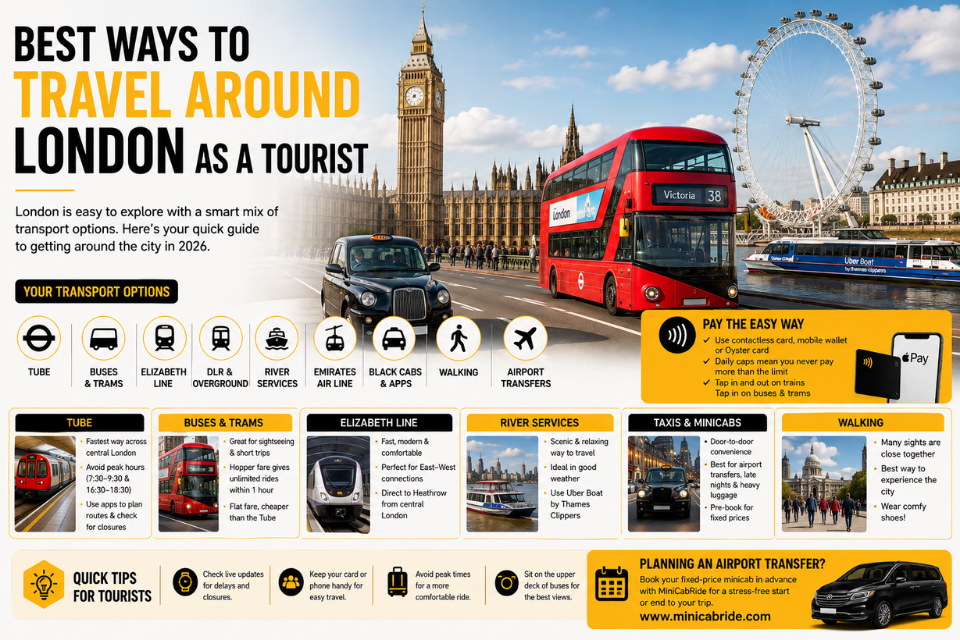
London offers a wide range of transport options, each with its own strengths. Most tourists end up using a combination of:
- London Underground (the Tube)
- Buses and trams
- Elizabeth line
- DLR (Docklands Light Railway)
- London Overground
- River buses (Uber Boat by Thames Clippers)
- Emirates Air Line cable car
- Black cabs and ride-hailing apps
- Walking
- Airport transfer services (Tube, trains, coaches, pre-booked minicabs)
In general, the Tube and buses will handle most of your daily journeys, while river services, the cable car and walking add variety and sightseeing value. Reserve taxis and pre-booked minicabs for airport trips, late-night travel, or when you have heavy luggage.
Read Also : Best Areas to Stay in London for Tourists
How Do I Pay for Transport in London?
Contactless bank cards, mobile wallets, and Oyster cards work across almost the entire network, and you never need to buy a paper ticket. The system is designed to be simple, even for short stays.
Key points:
- Contactless bank cards, mobile wallets (Apple Pay, Google Pay), and Oyster cards all work on the Tube, buses, trams, DLR, London Overground, the Elizabeth line, and most river services.
- Daily and weekly fare caps mean you never pay more than a set amount once you start making multiple journeys.
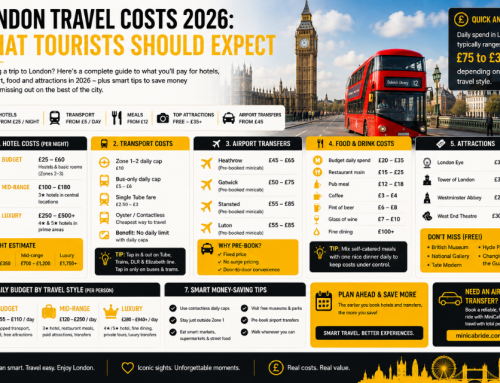
In 2026, a typical Zone 1 to 2 daily cap on the Tube and buses sits around £8 to £10, while bus-only travel caps at roughly £5 to £6 per day. Children under 11 travel free on buses and trams when accompanied by an adult, and discounted child rates apply on the Tube with an Oyster 5–10 Zip Oyster photocard or by using contactless where eligible.
You must tap in and out on the Tube, DLR, Overground and Elizabeth line. On buses and trams, you only tap in when you board.
When Should I Use the Tube?
The Tube is the best way to travel around London as a tourist and to cover longer distances across central London, and it’s the backbone of most tourist itineraries.
Use the Tube when:
- You need to cover longer distances quickly
- You are traveling between central zones (1 and 2)
- You want to avoid road traffic and delays
Helpful tips:
- Avoid peak hours (roughly 7:30–9:30 and 16:30–18:30 on weekdays) if you can, as trains are crowded and fares are higher.
- Use Citymapper, TfL Go or Google Maps to plan routes and check for closures.
- Stand on the right on escalators and let people off the train before you board.
For example, a journey from King’s Cross to Westminster takes around 15 minutes on the Piccadilly and Jubilee lines. In comparison, Paddington to Tower Hill is roughly 20 minutes using the Circle and Hammersmith & City lines.
Are Buses Worth Using as a Tourist?
Yes — buses are cheap, scenic and often underrated by first-time visitors. Bus travel is especially budget-friendly way to travel around London as a tourist.
Advantages of buses and trams:
- Flat fare per journey, with the Hopper fare allowing unlimited bus and tram journeys within one hour at no extra cost.
- Great for short hops and sightseeing, as you see the city instead of traveling underground.
- Often more accessible than the Tube, with level boarding and space for prams and luggage.
If you are looking for the best way to travel around London as a tourist. Buses are ideal for routes like Oxford Circus to Covent Garden, Victoria to Westminster, or Stratford to Greenwich. For purely tourist travel, buses can be slower than the Tube during rush hour, but they are perfect for relaxed daytime exploration.
What Do the Elizabeth Line, DLR and Overground Add?
These three rail services fill in the gaps the Tube doesn’t cover well, particularly for east-west trips and outer neighborhoods.
- Elizabeth Line: Fast, modern and air-conditioned, it is excellent for journeys between Paddington, Bond Street, Tottenham Court Road, Liverpool Street, Canary Wharf and out to Heathrow. Many tourists find it more comfortable than the Tube for east–west trips.
- DLR: Driverless light railway serving Docklands, Greenwich, Canary Wharf and Stratford. It is scenic, frequent and easy to use, with step-free access at many stations.
- London Overground: Orbital network connecting outer neighborhoods and some central areas. Useful for reaching places like Hampstead, Richmond, Clapham Junction and Stratford without going through central London.
For most central sightseeing, the Tube and buses will be enough, but these services become valuable when you venture further out.
Are River Buses and the Cable Car Worth It?
They’re a scenic add-on rather than a practical way to travel around London as a tourist — treat them as an experience, not your main transport.
- Uber Boat by Thames Clippers: Regular river buses running along the Thames between Putney and Barking, stopping at key points such as Westminster, London Eye, Tower Bridge, Canary Wharf and Greenwich. They are more expensive than the Tube and usually do not count toward daily fare caps, but they offer a unique perspective and can be a pleasant alternative for certain routes.
- Emirates Air Line: Funicular over the Thames connecting the Greenwich Peninsula with the Royal Docks. Consider it an attraction, not a form of transport. Tickets for both ways are for pleasure use only.
For everyday travel, the Tube, buses, and trains are usually faster and cheaper.
When Should I Take a Taxi or Pre-Booked Minicab to Travel Around London as a Tourist?
Getting the best transport option to travel around London as a tourist. Reserve taxis and London minicabs for late nights, heavy luggage or airport trips — for everyday journeys, they’re the most expensive option on this list.
Black cabs and ride-hailing apps are convenient but relatively expensive for everyday travel. They make the most sense:
- Late at night when public transport is less frequent
- When you have heavy luggage or mobility needs
- For direct, door-to-door journeys in a group
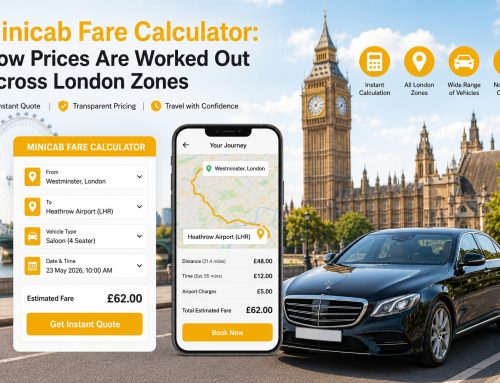
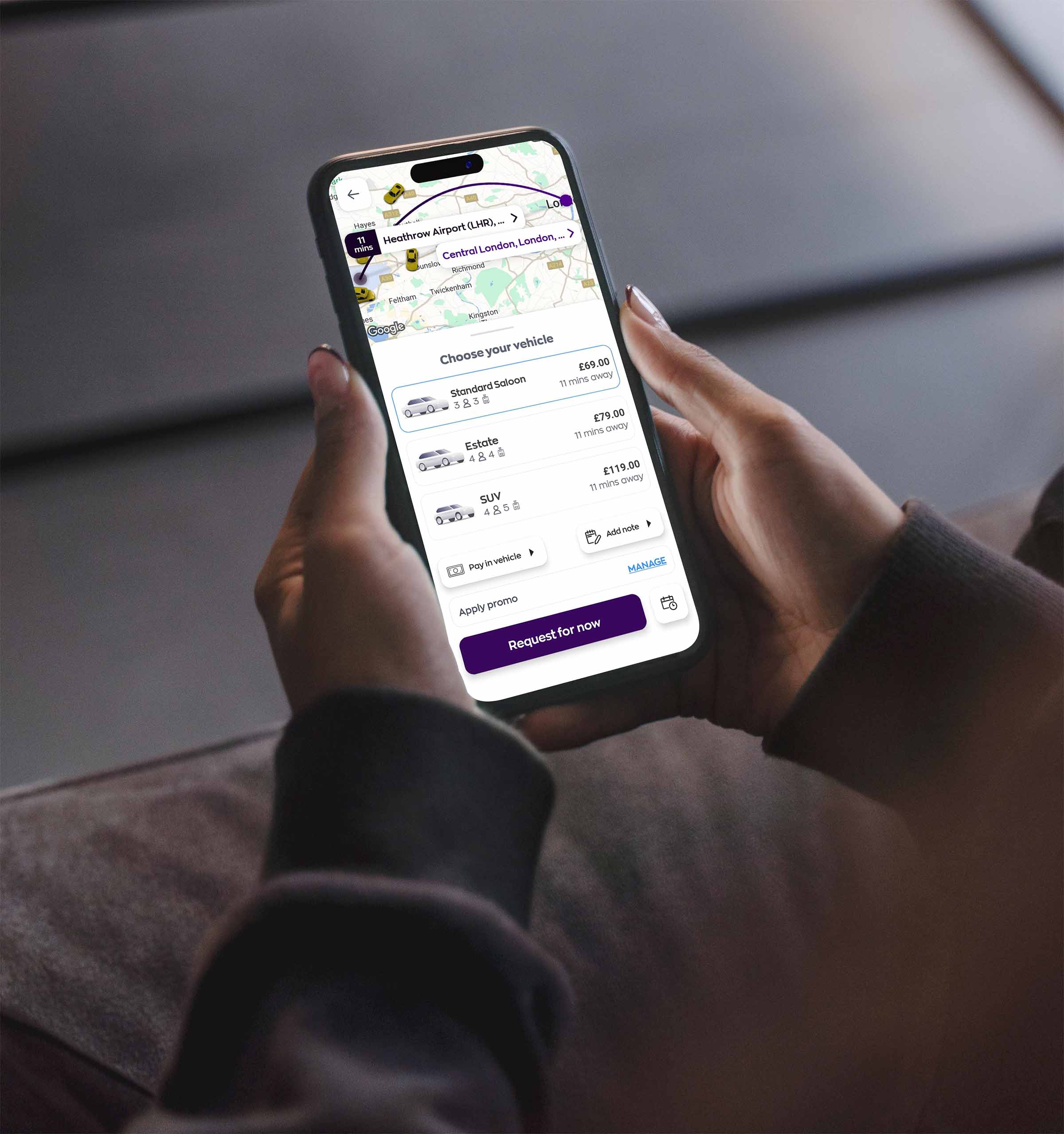
Typical short central journeys in a black cab or on-demand app can easily cost £15 to £30 or more, depending on distance, time and demand. Pre-booked minicabs are a fixed-price alternative to hailing a cab or relying on surge-priced ride-hailing apps, and are generally cheaper than on-demand black cabs for longer journeys like airport transfers — typically £45–£85 depending on the airport, compared to £60–£90+ for an on-demand black cab from Heathrow.
Should I Just Walk to travel around London as a tourist?
Often, yes — many of London’s top sights are closer together than they appear on a map, and walking is free, healthy and frequently the most enjoyable way to travel around London as a tourist and in central neighborhoods.
Consider walking:
- From Westminster to Covent Garden via Trafalgar Square
- Along the South Bank from the London Eye to Tower Bridge
- Through Soho, Chinatown and Mayfair on a food and shopping stroll
Use a map app to check distances to travel around London as a tourist. Wear comfortable shoes and allow extra time for photos and impromptu stops. For short hops of one or two miles, walking can be faster than waiting for a bus or navigating the Tube.
What’s the Best Way to Get To and From the Airport?
It depends on the airport, but public transport wins on price while pre-booked transfers win on convenience — here’s how each option breaks down.
- Heathrow: Piccadilly line (Tube), Elizabeth line, Heathrow Express, coaches and pre-booked Heathrow Airport minicabs. The Tube is the cheapest Way to travel around London as a tourist but slower with luggage; the Elizabeth line offers a good balance of speed and comfort; pre-booked minicabs provide door-to-door convenience at a fixed price.
- Gatwick: Gatwick Express, Southern and Thameslink trains, coaches and Gatwick Airport minicabs. Trains run fast to Victoria, London Bridge, or St Pancras, while minicabs are useful for groups or late arrivals.
- Stansted and Luton: Primarily served by trains and coaches into central London, with journey times around 45 to 60 minutes. Pre-booked Stansted Airport minicabs and Luton Airport Minicabs are popular for families and those with a lot of luggage.
- London City: Closest to central London, easily reached by DLR, Jubilee line and short taxi rides.
How Can I Keep Transport Costs Down?
Sticking to contactless caps, buses and walking will get you the furthest for the least money.
- Use contactless daily and weekly caps instead of buying single tickets.
- Walk where practical, especially in central zones.
- Use buses for short hops and sightseeing, taking advantage of the Hopper fare.
- Avoid taxis and ride-hailing apps for routine journeys; reserve them for late nights, heavy luggage or airport trips.
- If you do pre-book an airport transfer, splitting the fixed fare between travelers usually works out cheaper per person than individual rail tickets.
What’s the Best Way to travel Around London as a tourist & Family?
Buses tend to be the easiest mode for families, and a few fare rules can save you a meaningful amount.
- Children under 11 travel free on buses and trams when accompanied by an adult, and can travel free on the Tube, DLR, Overground and Elizabeth line with a 5–10 Zip Oyster photocard or by using contactless where eligible.
- Buses are often easier than the Tube for families, with level boarding, space for prams and no need to navigate stairs and crowded platforms.
- For longer days, consider mixing buses for short hops and the Tube or Elizabeth line for longer distances, avoiding peak times where possible.
- A pre-booked airport transfer can be cost-effective for Travel around London as a tourist and families, since one fixed fare often works out similar to several individual rail or Tube tickets, with far less hassle when traveling with luggage and car seats.
Practical Tips and Apps
A few tools and habits will make your travel around London as a tourist much smoother.
- Download TfL Go, Citymapper or use Google Maps for live departures, route planning and disruption alerts.
- Check the TfL website for step-free access information if you have mobility needs or are traveling with a pram.
- Keep your contactless card or phone handy and remember to tap in and out correctly.
- Follow basic etiquette: stand on the right on escalators, let people off the train before you board, and keep your voice down.
Once you’re familiar with these options to travel around London as a tourist, it feels less like a challenge and more like something that builds confidence. When you know how much you have to pay, what modes to choose depending on the trip you wish to make, and when a pre-booked transfer makes sense over public transport, you’ll be able to concentrate on enjoying all that London has to offer.