
Table of Contents
London is an exciting city, but for a first-time visitor, it can also feel busy, expensive, and slightly confusing. That is why a good first trip to London requires more than a general overview; it should provide clear answers on where to stay, how to get around, what to see first, and how to avoid common travel mistakes.
This London Travel guide is designed to help you plan a smooth, enjoyable trip to London with practical advice, local insights, and the best things to do, all without feeling overwhelmed.
Why London is worth visiting
A trip to London will be unique, as it offers everything under the sun in one place: history, culture, shopping, food, and famous landmarks. One can start the day touring royal palaces, continue to world-renowned museums during the afternoon, and end up by the riverside or in the West End area at night. Therefore, London travel guide information is very helpful in that case.
London is also suitable for various kinds of tourism. There are museums and parks for families, theaters and restaurants for couples, and convenient public transport for single travelers. All of this makes London Travel guide material on London very topical for tourists, especially those visiting London for the first time.
Where to stay in London for first-time visitors
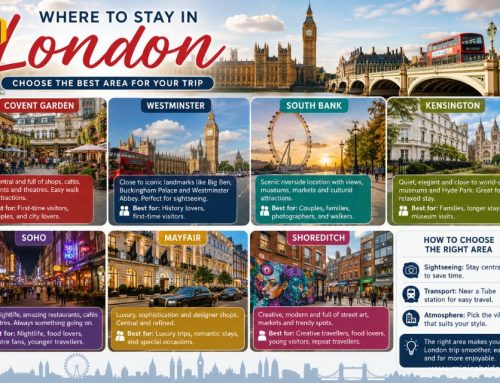
Choosing the right area matters a lot on your first trip to London because the city is large and travel time can quickly eat into your day. The best areas for a first-time visitor to London are usually central, well connected and close to major sights.
Good areas to consider include:
- Covent Garden, for theatre, dining and central access.
- South Bank, for river views and famous attractions.
- Westminster for classic sightseeing and easy access to landmarks.
- Kensington, for museums and a quieter atmosphere.
- Bloomsbury, for a more relaxed stay with strong transport links.
If you want convenience, stay near Victoria, Paddington, King’s Cross or Waterloo. These areas work well if you are arriving by train, using airport transfers, or planning to explore several parts of the city. For a first-time visitor to London, location is often more important than luxury because it saves time, energy and transport costs.
Getting to London and around the city
One of the most useful parts of a first-time visitor’s guide to London is transport advice, because getting around well can make the entire trip easier. Most travelers arrive at Heathrow, Gatwick, Stansted or Luton, and each airport offers different transfer options into central London.
A few practical transport tips:
- Use the Elizabeth Line or Heathrow Express from Heathrow.
- Use Gatwick Express or regional rail from Gatwick.
- Compare coach and rail options for Stansted and Luton.
- Use contactless payment or an Oyster card on the Tube and buses.
- Travel off-peak when possible to avoid crowding and higher stress levels.
Pre-booked taxis are also worth considering for airport arrivals, late-night journeys or family travel. They offer fixed pricing, direct door-to-door service and less hassle with luggage, which is especially useful if you are visiting London for the first time and do not want to manage station changes straight after landing. For many visitors, a pre-booked taxi provides a calmer, more reliable start to their trip in London.
How many days you need
A trip to London will be unique, as it offers everything under the sun in one place: history, culture, shopping, food, and famous landmarks. One can start the day touring royal palaces, continue to world-renowned museums during the afternoon, and end up by the riverside or in the West End area at night. Therefore, London travel guide information is very helpful in that case.
For those having five to seven days, the first visit to London is made more flexible. More areas will be visited, mornings will not have to be rushed, and a day out of the city is possible.
Best things to do in London
The best things to do in London for first-time visitors usually depend on interest, but some places are so iconic that they should be near the top of any itinerary. These attractions give you a strong first impression of the city and are easy to combine into a sensible route.
Top sights to prioritize:
- The Tower of London and Tower Bridge.
- Buckingham Palace.
- Westminster Abbey.
- The Houses of Parliament and Big Ben.
- The London Eye.
- The British Museum.
- The National Gallery.
- A walk along the South Bank.
If you enjoy a mix of culture and atmosphere, add Borough Market, Covent Garden and a Thames riverside walk. These areas give you a feel for everyday city life while still fitting naturally into a first trip to London. Many first-time visitors also enjoy a hop-on hop-off bus or a river cruise because it helps them see the city from a different angle.
Areas and neighborhoods to explore
A London tourist guide should not focus only on landmarks. To really understand the city, you should spend time in different neighborhoods because each one has its own personality. Useful neighborhoods for first-time visitors include:
- Notting Hill, for pastel streets and Portobello Road.
- Camden, for markets and alternative culture.
- Shoreditch, for street art and cafés.
- South Bank, for river views and major sights.
- Soho, for dining, nightlife and central convenience.
Exploring these areas helps your trip in London feel more complete. It also gives you better content opportunities if you are writing a London travel guide that needs semantic depth and local relevance. Search engines tend to favor content that covers not just what to see, but where to go and why it matters.
Food, costs and budget tips
London can be expensive, so practical cost advice is important for first-time visitors. You do not need to spend heavily to enjoy the city, but it helps to plan around transport, meals and entry fees. Simple money-saving tips:
- Use free museums where possible.
- Book major attractions online in advance.
- Eat at markets, food halls and cafés instead of tourist-heavy areas.
- Travel by contactless or Oyster rather than buying single tickets.
- Stay central so you spend less on transport.
Food is one of the best parts of a first trip to London, but it can also be one of the easiest places to overspend. Borough Market, Camden Market and South Bank food stalls offer good options for a more flexible budget. If you want a more traditional experience, afternoon tea is popular, but it is worth comparing prices before booking.
Safety, weather and local advice
London is usually a very safe place to visit; however, new tourists should remain cautious in crowded places, such as on public transport and in tourist-frequented areas. One should keep their valuables safe and plan their journey.
Weather is another factor that can affect your trip in London. It can change quickly, so pack layers, comfortable shoes and a light waterproof jacket. A small umbrella is always a sensible addition, especially if you are planning to walk between attractions.
Local etiquette is also an important consideration. Be sure that you stand to the right-hand side of escalators, allow other passengers to alight from the Tube before stepping in, and keep your voice down on public transport.
Planning a simple itinerary
A good first-time itinerary should not try to cover everything. Instead, it should focus on one area at a time so you can move around efficiently and enjoy each place properly.
A simple approach could be:
- Day 1: Westminster, Buckingham Palace and the South Bank.
- Day 2: The Tower of London, Tower Bridge and Borough Market.
- Day 3: The British Museum, Covent Garden and Soho.
- Day 4: Kensington museums, Hyde Park or a river cruise.
This kind of planning makes your first trip to London feel more relaxed and manageable.
Final advice for first-time visitors
If you are visiting London for the first time, the best approach is to keep things simple, central and realistic. Choose a good area to stay in, plan transport in advance, use pre-booked taxis when they make sense, and focus on the best things to do in London rather than trying to do too much.
A first trip to London is always better when the logistics are easy, and the itinerary has breathing room. With the right planning, your London travel guide can become a smooth, useful, and memorable experience rather than a stressful one.